AIHC at the Washington State Public Health Association Annual Conference 2026
October 30, 2026 | Information, Press Release
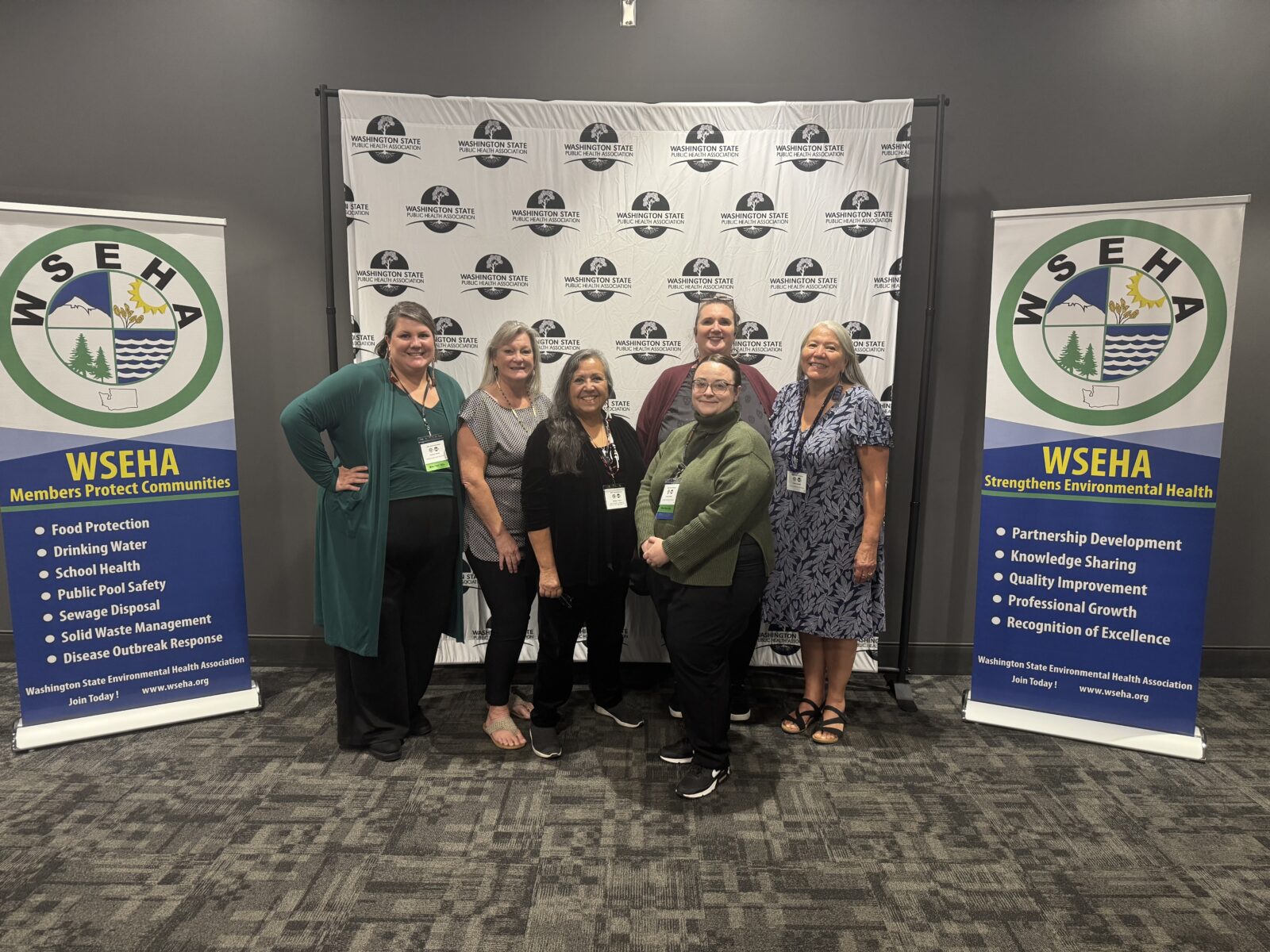
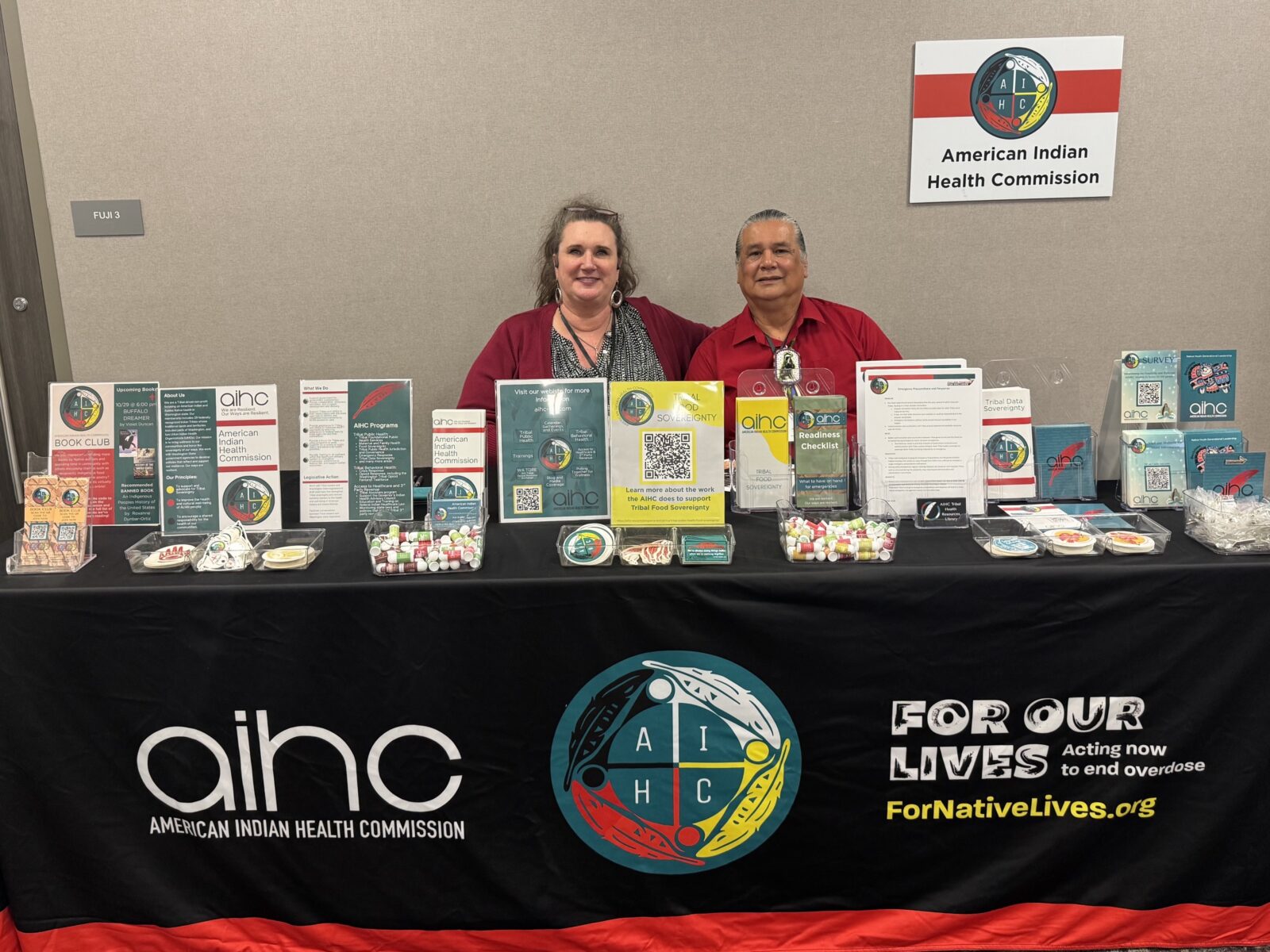
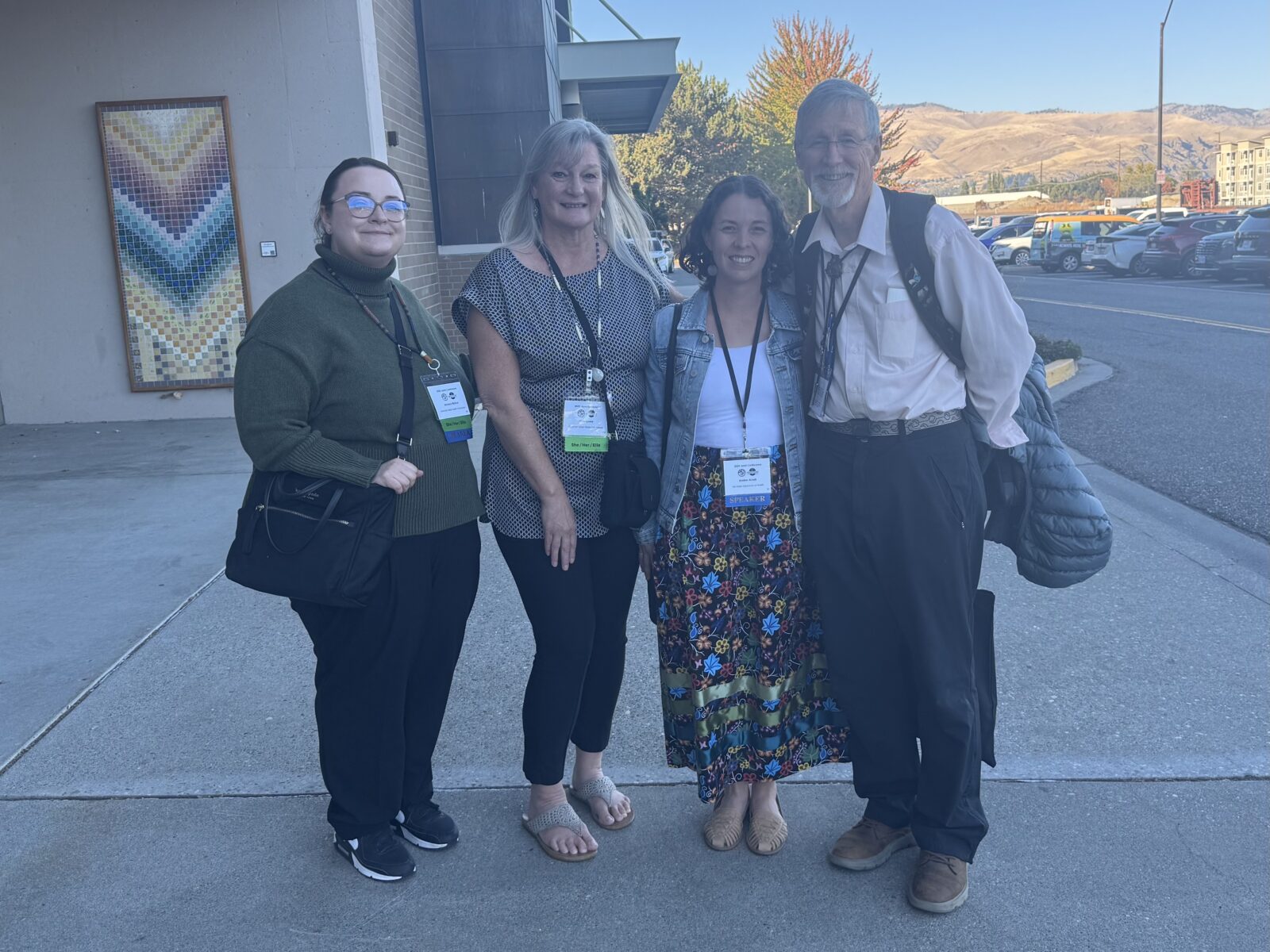
Earlier this month, we had the opportunity to join other public health professionals across the state at the WA State Public Health Association Annual Conference. AIHC was heavily represented with 2 presentations, a panel, and an exhibitor table.
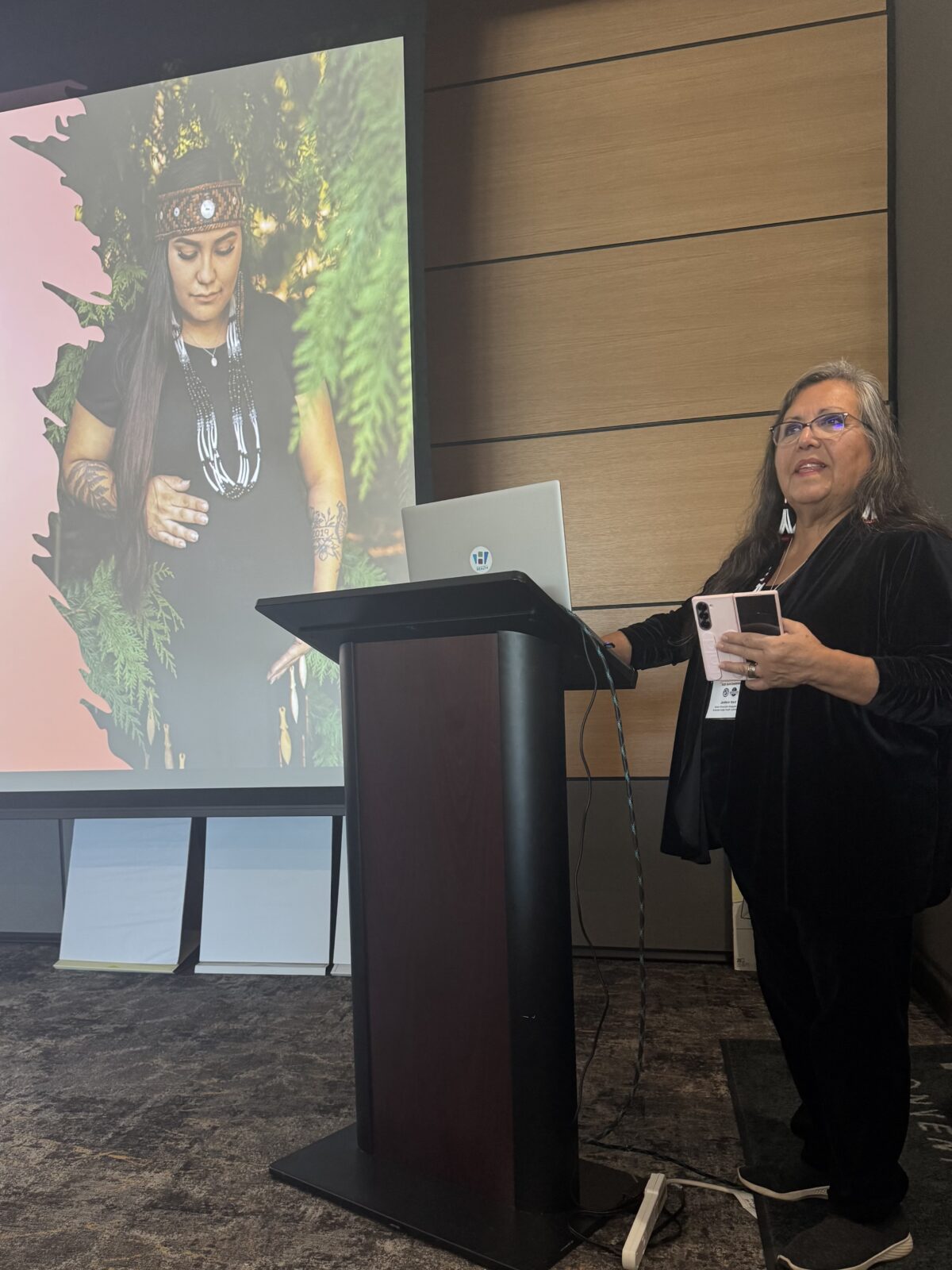
PRAMS Introductory Presentation
JanMarie Ward, MHP – AIHC Senior Public Health Policy and Project Consultant and Cindy Gamble, MPH, CLC – AIHC Tribal Community Health Consultant, presented on Tuesday, introducing the AI/AN Pregnancy Resilience and Risk Assessment and Action Monitoring Surveillance System, a PRAMS-like survey focused on Indigenous-informed data and methods. Their presentation emphasized the importance of Tribal-developed and led projects, especially pertaining to pregnancy risk in AI/AN birthing people.
In Washington State, AI/AN communities have the highest rates of pregnancy-related deaths. The Maternal Mortality Review Panel found that ~90% of those deaths were preventable. This work helps identify risk factors specific to AI/AN communities, such as intergenerational trauma and systemic barriers to health, while also creating space to talk about protective and preventative factors in maternal health.
Maternal Mortality Panel
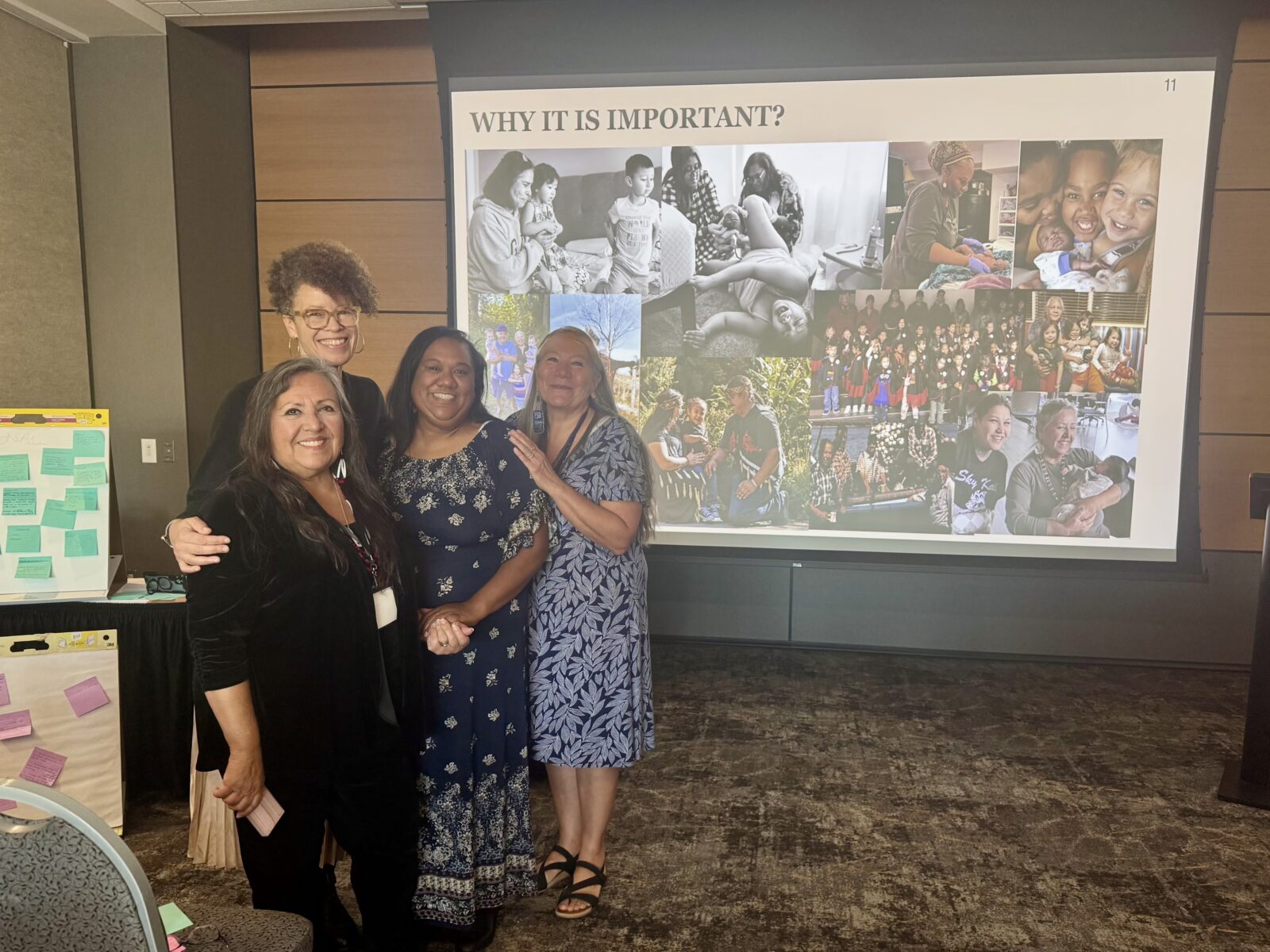
The following day, JanMarie moderated a panel discussion on community-driven solutions to eliminating preventable maternal mortality in American Indian/Alaska Natives, Black, and Native Hawaiian and Pacific Islander communities.
Panelists:
- Cindy Gamble, MPH, CLC
- Dr. Tara Lawal, DNP, FNP, CNM
- Dr. Wendy Barrington, PhD, MPH
Questions for the panelists:
- What does an authentic partnership with public health systems look like in practice, and how is it different from what you’ve experienced?
- Can you share and example of community-led knowledge or a culturally grounded practice that improved maternal health outcomes but wasn’t recognized as “evidence”?
- What needs to change and how do we clear a path to make it happen?
The over-arching theme in responses to these questions was: love – love as a community/culturally grounded practice that isn’t always recognized as evidence, loving institutions and care.
There was also discussion amongst the panelists around the idea of “grow your own providers” – the people experiencing the disparities are the experts in how to resolve them, so growing people from your community into the providers your community needs can help eliminate damage from a revolving door of providers. However, higher education requirements are creating disparities due to cost and systemic barriers.
Tribes and Notifiable Conditions
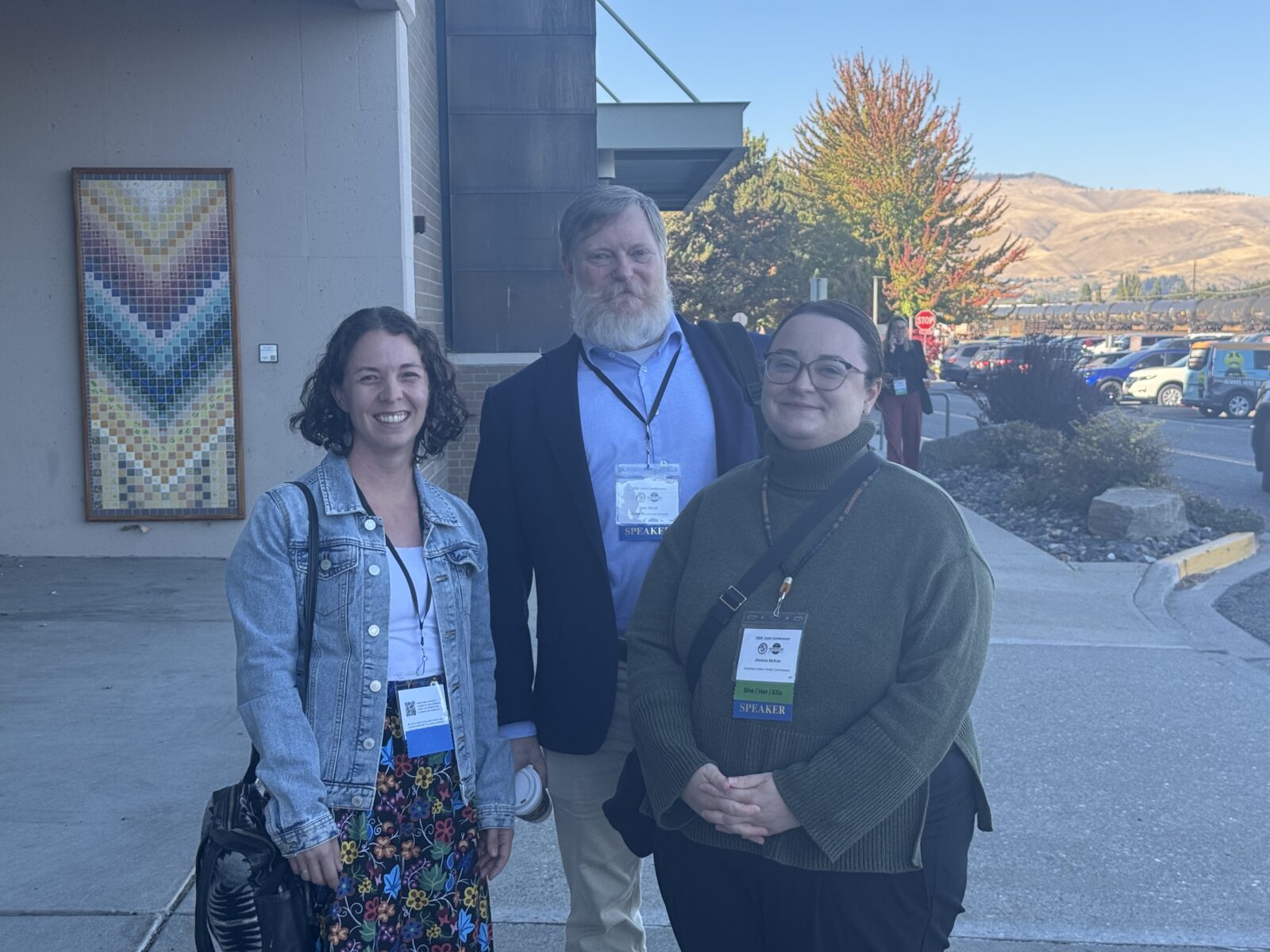
Also on Wednesday, Jessica McKee, PhD, MPH – AIHC Tribal Public Health Programs Administrator, presented on working to ensure notification conditions are reported to Tribes, along with Nate Weed, MPH – Chief of Resiliency and Health Security, WA State Department of Health and Amber Arndt, MPH – Tribal Policy Director, Office of Tribal Public Health and Relations, WA State Department of Health.
A notifiable condition is an illness, suspected illness, or confirmed laboratory result that must be reported by law to public health authorities. Currently, per the Washington Administrative Code (WAC) there are 139+ noticeable conditions.
As sovereign nations, Tribes have inherit public health authority. Tribal jurisdictional powers include authority to declare a public health emergency on Tribal land, ordering mandatory isolation and quarantine, closing reservation borders, establish a Tribe’s own priority populations for receiving vaccines, and conducting data surveillance.
However, current notifiable conditions systems were built to be used by Local Health Jurisdictions (LHJs) responding to an issue; however they are not the only public health authority with this responsibility.
In March, the American Indian Health Commission conducted a virtual tabletop exercise with Tribes and LHJs, exploring a fictional scenario with a noticeable condition identified in an AI/AN child residing on a Tribal reservation. One of the main findings from this exercise was there was no clear answer as to who would notify the Tribe of a noticeable condition in their jurisdiction.
The presentation ended with an overview of the our Notifiable Conditions legislation that will be introduced for the 2027 Legislative Session. This legislation will ensure Tribes will be timey notified of disease outbreaks in their jurisdiction.
Honoring Dr. Frank E. James: WSPHA’s Lifetime Achievement Award at the 2026 WSPHA Annual Conference
WSPHA’s Lifetime Achievement Award stands apart from WSPHA’s annual awards process. It is reserved for remarkable leaders whose contributions have been sustained over a career and have reached far beyond the usual expectations. WSPHA’s leadership unanimously agreed to recognize Dr. James for decades of service to population health, infectious disease prevention, medical education, and community wellbeing, from the Pacific Northwest to communities around the world.
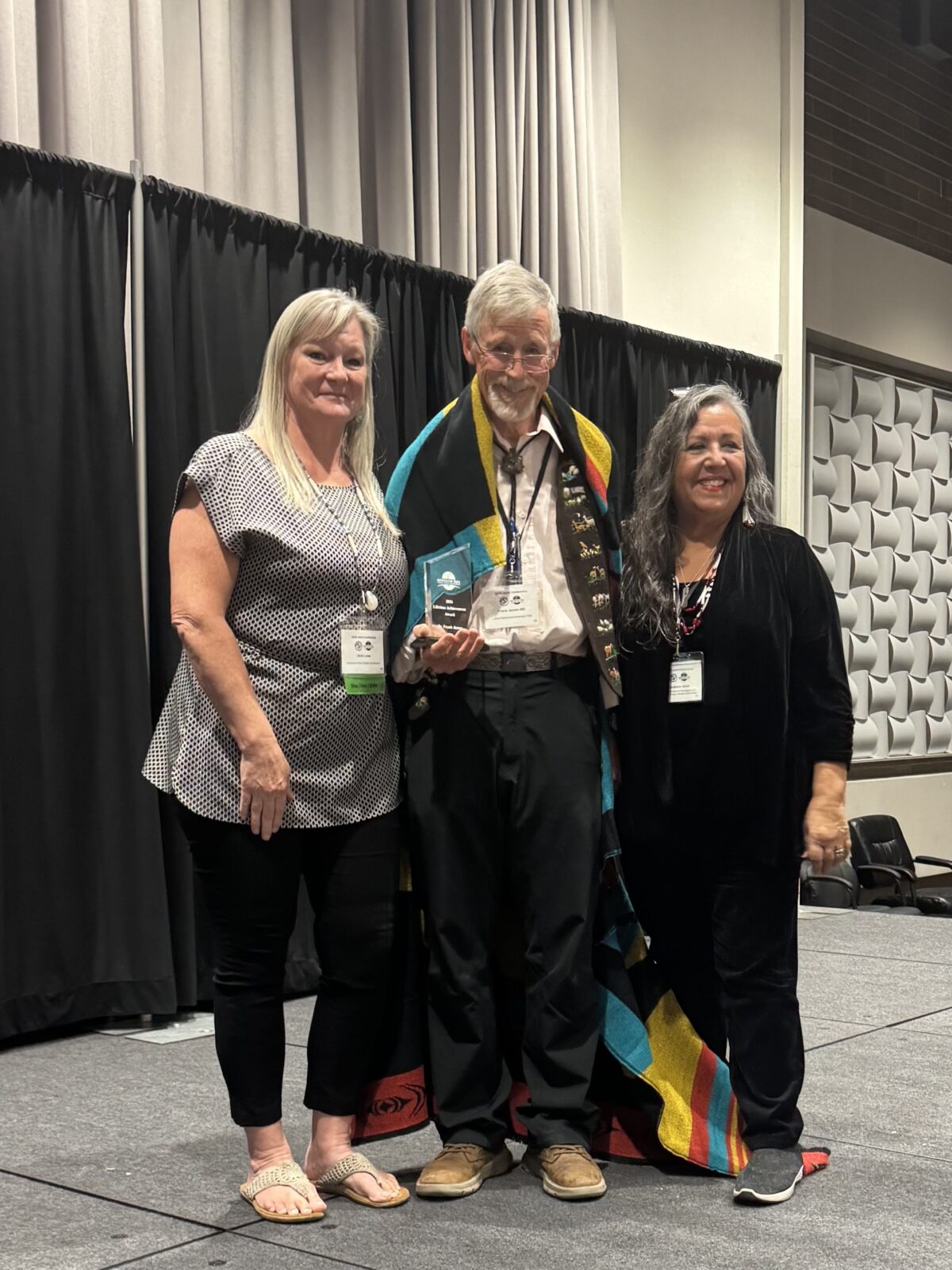
Dr. James is a trusted voice on infectious disease prevention and immunization for AI/AN communities. A steadfast advocate for Tribal public health, he generously shares his expertise at convenings hosted by AIHC. His service is remarkable in both length and breadth.
- He serves as Public Health Officer for the Lummi Nation.
- He served more than 15 years as Health Officer for the Nooksack Indian Tribe
- He served more than 30 years as Health Officer for San Juan County, where he led responses to rabies exposures, chicken pox, COVID-19, and more.
- He has taught at:
- the University of Washington School of Public Health
- Yang Ming University in Taipei
- Fairhaven College at Western Washington University
- He also founded Travel Medicine Northwest in Bellingham
- He serves as Medical Director of Island Primary Care’s Orcas Clinic.
The most profound words about Dr. James’s impact come from Mackayla Alvarez, a Lummi Tribal member and medical assistant who works alongside him at the Lummi public health clinic:
Some people work a job.
And some people give their whole spirit to the people.
Dr. Frank James gave forty-three years
to Indian Country.
Forty-three years of early mornings,
late nights, heavy hearts,
phone calls that followed him home,
and carrying the kind of responsibility
most people will never understand.
He stood beside our people
through grief, sickness, loss, and healing.
He stayed when things were hard.
He kept showing up when communities were hurting.
He chose Native people over and over again,
for nearly half a century.
And even now,
after all these years,
he still continues to work for Indian Country.
Still continues to serve.
Still continues to give pieces of himself
to communities that need people like him most.
That kind of love cannot be taught.
It comes from the heart.
There are families across Indian Country
who may never realize
how much of their healing carries his fingerprints.
How many lives are better
because he cared enough to stay.
In Native communities,
we remember the ones who walk gently with the people.
The ones who do not need recognition
to continue serving anyway.
The ones who carry medicine
not only in their knowledge,
but in the way they make others feel seen.
That is Dr. Frank James.
And today,
the Lummi Public Health Department and the Lummi Nation community
want him to know
how deeply grateful we are to have him.
Grateful for every year he stayed.
Grateful for every person he helped carry through hardship.
Grateful for the wisdom, kindness, and strength
he poured into our people.
We see the sacrifices.
We see the years he gave away from his own life
so others could have healthier ones.
We see the compassion he carried
even on the days he was probably tired himself.
Forty-three years is more than dedication.
It is ceremony.
It is prayer put into action.
It is loving Native people loudly enough
to spend your entire life fighting for them.
And long after titles fade
and offices empty,
his name will still be spoken with respect
because people like him
become part of the heartbeat of the community.
Dr. Frank James.
Thank you for loving Indian Country
with your whole heart.
-MacKayla Alvarez (Whe’Cho’Litsa)
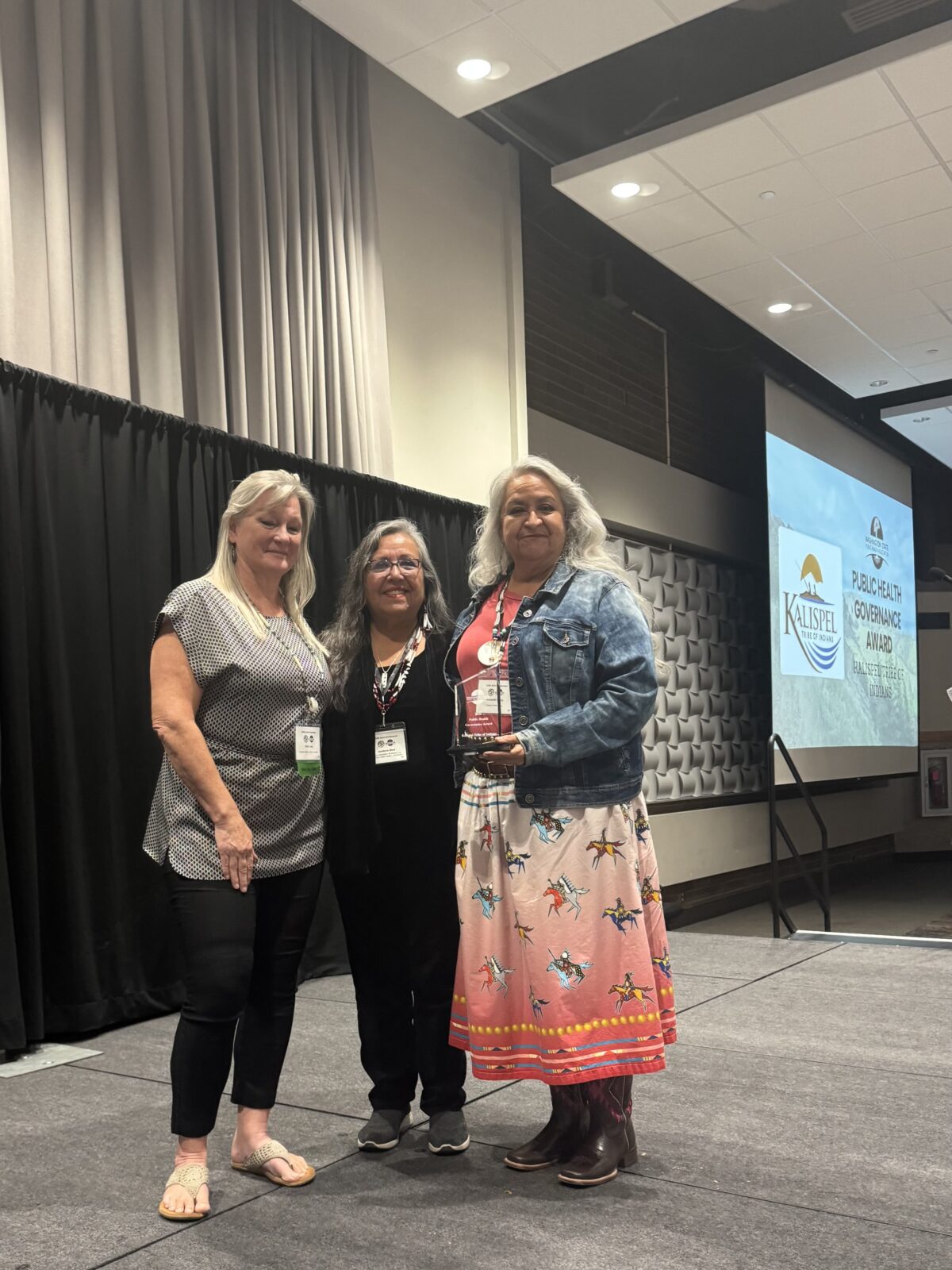
WSPHA honors the Kalispel Tribe of Indians for their Public Health Achievements
AIHC nominated The Kalispel Tribe of Indians for its demonstrated leadership and commitment in funding a dedicated staff position for a chronic care coordinator — a role they have fully integrated into their broader care team rather than treating as a standalone function. This investment reflects a whole-person, whole-team approach to chronic disease management that strengthens continuity of care for Tribal members.
Beyond this direct investment in their community’s health infrastructure, the Kalispel Tribe has also been a consistent participant in the Tribal Foundational Public Health Services (FPHS) efforts at the statewide Tribal level with AIHC and contributes to broader initiatives that advance public health capacity across Indian Country. Liz Henry, health care administrator for the Kalispel Tribe’s Camas Center Clinic accepted the award.
JanMarie Ward (Chumash), AIHC Senior Public Health Policy and Project Advisor, Steps Down from the WSPHA Board
JanMarie Ward joined the WSPHA Board of Directors in 2018. Marilyn Scott, former AIHC Chair and Upper Skagit Tribal Council Member, and Charlene Nelson, former Chairwoman of the Shoalwater Bay Tribe, encouraged her to serve. Her contributions include:
- Racism as a Public Health Crisis Resolution (2022): Co-led the development of the resolution with Adrian Dominguez. It affirms Tribal sovereignty, self-determination, and government-to-government relationships as foundational to public health.
- DEIB Committee: Founding chair of the Diversity, Equity, Inclusion and Belonging Committee.
- Establish the DEIB Roundtable panel forum. Current focus is on Maternal Health
- Perinatal and Maternal Mental Health Link to Watch Recording (Passcode: &s5s$e8P )
- Establish the DEIB Roundtable panel forum. Current focus is on Maternal Health
- Adrian Dominguez Memorial Scholarship: Chairs the scholarship committee. At the 2026 annual conference JanMarie and Bill Templeman presented the first award to Julissa Diaz-Magaña, an MPH student at the University of Washington.
- Tribal welcome: Established a standard practice to invite the Tribe, where WSPHA annual conference is to be held, to provide a welcome to attendees, share about their history, and health infrastructure.
- Annual Conference Content:
- Recruited Michael Bird, (Kewa Pueblo/Ohkay Owingeh Pueblo) former President of the American Public Health Association (APHA) and the only American Indian to serve in as president, to keynote at the 2023 WSPHA Conference. He is a wonderful mentor and is also always looking for other Natives to join APHA. https://www.apha.org/
- Served on committee to bring Heather McKee, author of the The Sum of Us: What Racism Costs Everyone and How We Can Prosper Together, to as the keynote for the 2022 conference.
- Expanded abstract outreach to bring in Tribal and BIPOC content, speakers, and participants.
- Awards: Expanded WSPHA awards to recognize Tribes and people working in the fields of public health, equity, and social justice.
- Leadership: Served as President-Elect (2022), President (2023), and Past President (2024). In those roles she:
- Mentored Mackayla Alvarez (Lummi), a young Tribal public health professional.
- Gave the President’s Award to Vicki Lowe, Executive Director of AIHC, as recognition of leadership on American Indian and Alaska Native health policy, including the initial passage of the Washington State Indian Health Care Improvement Act and the policy work since.
- Presented, with former WSPHA Executive Director Jeff Ketchel, WSPHA’s Racism is a Public Health Crisis resolution at the 2023 American Public Health Association, Boston, Ma, as an effort to lead by example to other state public health associations.
JanMarie will continue to chair the DEIB Committee and the Adrian Dominguez Memorial Scholarship. She will also chair the WSPHA 501(c)(3) during the transition from its current status as a 502(c)(6).
As she steps down, JanMarie encourages people in Tribal public health and beyond to get involved with WSPHA by joining as members, serving on the board, or joining a committee. Learn more at WSPHA.org.