Quarterly Newsletter – 2025 Edition 2 – June
June 2, 2025 | Newsletter
Upcoming Delegates Meeting – June 5, 2025
Hosted at The NATIVE Project – see invite sent from info@aihc-wa.com for more details on how to get there and parking.
Read our Press Release summarizing the WA Tribal Opioid Fentanyl Summit.
Upcoming Events
- Governor’s Indian Health Advisory Council Meeting – Wednesday, June 11, 2025 – 9 am to noon in Olympia at the HCA Cherry Street Plaza
- Tribal Canoe Journey – Paddle to Elwha – Final Protocol August 1 through August 5, 2025, at Lower Elwha
- September Delegates Meeting – September 3, 2025, at Lummi. Please see invite from info@aihc-wa.com for more details.
- National Indigenous and Native American WIC Coalition Conference – September 16 – 18, 2025 at the Clearwater Resort in Suquamish. More information, including how to registers, will be available soon.
- Stay up to date on all upcoming events – Check out the calendar on our website for upcoming meetings and events: https://aihc-wa.com/calendar
From the Executive Director
Another quarter has gone by quickly. Among our regular AIHC and state agency meetings, since our last meeting on Feb 5th, I have also attended the following meetings:
- WA Tribal Law Enforcement Conference on March 12th at Camp Murray. AIHC supported food and lodging for the event, which was hosted by the WA State Department of the Military and the Office of the Attorney General. An overview of the event can be found here in the letter from Police Chief Pruitt, Sauk-Suiattle: Col Bodenman – Tribal Police Chiefs Counterdrug Leadership Conference
- Heather Erb and I have had three meetings with staff from the Washington State Hospital Association (WSHA) to address issues from early discharge from hospital emergency departments for people in behavioral health crisis. We will meet again in June but have focused on four tools to help resolve the problem:
- Train hospital staff on working with Tribes as governments and how the Indian Health Delivery System works
- Develop AIHC/WSHA Guidance the federal/state laws about sharing information with Indian Health Care Providers and Tribal Governments (similar to Federal and Washington State Legal Protections for Indian health care providers)
- Support hospitals signing Care Coordination Agreements with Tribes to ease concerns about HIPPA
- Look at adding hospitals to Tribal Crisis Coordination Protocols: tribal-crisis-coordination-protocols-template-2023.pdf
- I also attended:
- Conference for non-profits funded by Inatai
- State Assessment meeting that included a full day of discussion on Tribal data
- Meetings for the Complex Discharge Taskforce: Dear Tribal Leader Letter: Complex Discharge Task Force – Invitation to Participate in Workgroups.
We are still working with GOIA to hire for the position to bridge the work between the Governor’s Tribal Leaders Social Services Council (GTLSSC) and GIHAC.
Tribal Public Health
Written by Heather Erb
The primary purpose of the American Indian Health Commission (AIHC) is “to support and advocate for Tribal sovereignty.” In carrying out this mission, AIHC developed a long list of Tribally-tailored public health trainings, codes, plans, and guides to help support Tribal self-governance and strengthen Tribal public health sovereignty. We are currently compiling and organizing these documents into the AIHC Tribal Public Health Resource Library available through SharePoint and eventually, online. These materials may be used to help train and onboard new employees, prepare for the next public health emergency, and develop and strengthen Tribal public health governance structures. Our library offers resources in the following areas:
- Tribal Public Health Jurisdiction and Governance
- Healthy Communities
- Food Sovereignty
- Maternal and Family Health
- Tribal Data Sovereignty and Data Privacy
- Communicable Disease Control and Prevention
- Environmental Public Health
- Emergency Response
For more information about these materials or to provide feedback, please contact info@aihc-wa.com.
Tribal Behavioral Health
Written by Kathryn Akeah
Superior Court Judges Association Spring Program Presentation

On April 28, 2025, AIHC Lead Policy Advisory Heather Erb and Consultant Kathryn Akeah presented to over 80 Superior Court Judges Association Spring Program attendees. The session was in conjunction with the Tribal Warrants Workgroup and sponsored by the Tribal State Court Consortium. Heather and Kathryn focused on Involuntary Treatment Act laws, specifically new places where the state systems and Tribal systems interact.
Judge Riquelme introduced the group and Chelsea Sayles and Melissa Simonsen from the Tribal Warrants Workgroup kicked off a presentation on the Tribal Warrants Act (RCW 10.32). They focused on certified and non-certified Tribes and what judges can do in each step of court procedures.
Kathryn then gave a quick background on displacement of Native people, health disparities, and Indian Health Care Providers. She shared an overview of where behavioral health systems are headed and how Tribes interact and connect their members to the state system.
Heather updated the judges on key parts of the law where Tribes and Tribal systems are included while keeping two important concepts at the front: Indian Health Care Providers are a key component of the behavioral health system who are critical in crisis response and Tribal courts are critical partners in behavioral health response and recovery.
AIHC had tried several times to present to state court judges and with the number of questions from the superior court judges we are hopeful that there will be more presentations in the future.
Regional Tribal Designated Crisis Responder Planning Kicks Off
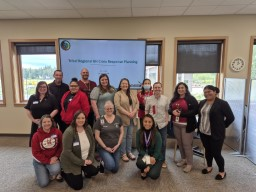
On May 7, 2025, the Nisqually Tribe hosted Tribal Behavioral Health Department staff from six Tribes, Office of Tribal Affairs staff from Health Care Authority, and CHOICE, to talk through a potential shared resource – a regional Tribal Mobile Crisis Response Team and Tribal Designated Crisis Responders (DCRs). Mobile Crisis Teams respond in-person to crises to de-escalate most situations and coordinate voluntary services. Tribal DCRs are professionals who assess people for grave disability, and/or imminent harm, and can petition courts for involuntary treatment, if needed.
Staff from Nisqually, Chehalis, Squaxin Island, Skokomish, and Quinault attended the workshop and gave their expertise to inform several areas,
- Ways the current behavioral health crisis system could improve practices.
- What a shared Tribal mobile crisis team could mean for communities – faster response times, better coordinated care, more control over the process.
- Mobile Team operational considerations, especially to help figure out the scope of services a team would provide, the staffing models of most interest, and potential funding mixes.
The group was also joined by the Peer Specialist and Tribal Designated Crisis Responder from Tulalip Mobile Rapid Response Crisis Team. The Tulalip MRRCT members were able to share their experience setting up the team, responding to calls, interacting with non-Tribal entities, and serving the community.
The group is committed to meeting regularly to figure out more details. Tribal BH department staff see a shared mobile team as both practical and providing the best care possible.AIHC has facilitated six tabletop exercise workshops since the first one in 2022. AIHC is happy to facilitate this type of workshop at your Tribes or now with this new model, across several Tribes. Contact Kathryn Akeah for more information.
Government-to-Government
Written by Vicki Lowe
Our state government is still in transition; we are waiting for Health Care Authority Director and Department of Health Secretary to be selected. Department of Social and Health Services will also have a new Secretary with the retirement of Sec. Cheryl Strange last week. Bea Rector is acting as Secretary for DSHS.
At the WA Tribal Opioid and Fentanyl Summit, AIHC Chair Steve Kutz called on State Leadership to ensure Tribal Liaisons to report directly to the head of the state agency as directed in RCW 43.376.020: Government-to-government relationships—State agency duties.
The Governor’s Indian Health Council’s (GIHAC) first meeting of 2025 will be June 11th. GIHAC received several assignments from the legislature. This session we will learn about and vote on how the Native Coordination Hub will be developed for Medicaid Transformation 2.0, build a report on Federal Medical Assistance Percentage (FMAP)* reporting regarding the Indian Health Care Delivery System, plan for the CMS 1115 Waive to Medicaid for Traditional Indian Medicine billing, and discuss how to build a Tribal Behavioral Health Services Organization. GIHAC will also hear about legislative priorities coming out of the WA Tribal Opioid Fentanyl Summit.
More details can be found here: Calendar | American Indian Health Commission
*FMAP-formula that determines how much federal funding states receive for their Medicaid programs
Access to Healthcare Revenue
Written by Laura Kluever
Tribal Assisters Training 2025
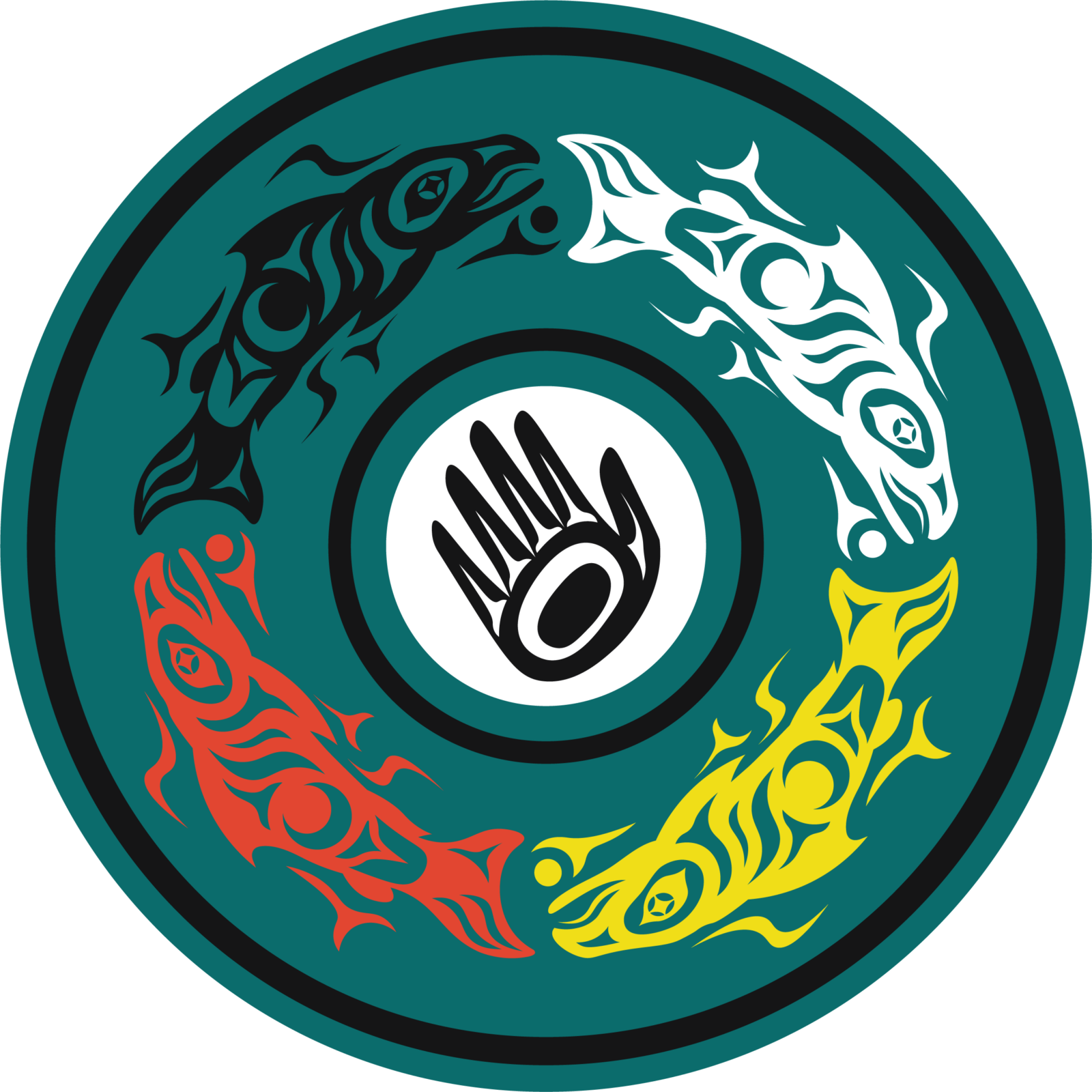
New Tribal Assisters Program logo – we hosted an art contest during April for a new logo and had submissions 9 different Native artists. Tribal Assisters were able to vote for the one they liked best as part of the post-event survey after the training. Congratulations to our winner Madison Judkins, an enrolled member of the Shoalwater Bay Indian Tribe (and a new mother).
At the Tribal Assister Training in April, we had great turn out with 18 Tribes and one Urban Indian Health Programs attending:
- Day 1: 61 in person attendees; 14 virtual attendees
- Day 2: 65 in person attendees; 19 virtual
The following gave remarkable training for the Tribal Assisters:
- Washington Health Benefits Exchange
- Social Security Administration
- SHIBA Program
- OIC
- Attorney General Office
- WA HCA Meds/Eligibility and Tribal Liaisons
- AIHC
Some questions asked were about the tax credits and how to avoid tax penalties at the end of the year. WAHBE gave a Spring Training course to help answer that issue.
WA HCA Meds/Eligibility helped with how to get in touch with a staff worker for income and document reviews. During the Public Health emergency, they had 70 community-based staff workers to verify income/documents. It’s now down to 10 workers for the whole state. They had said there is no way to automate reviews for AI/AN. It can take 15 days to 6 weeks to get information verified without the Tribal Assisters following up.
WA HCA Tribal Liaisons are perfect for Tribal Assister to reach out to for different problems that may occur for the Tribal Relative for faster answers. Each Tribal Liaisons has a specific specialty in different fields through healthcare system.
During Laura’s tenure as a Tribal Assister for the last 13 years, she has found this training to be the most valuable each and the only training that pertains to a Tribal Benefit Coordinator in the Indian Health Clinics. This is a safe place to speak about the daily problems that occur for Tribal Relatives and to learn how to reach out to other agencies when help is needed.
Legislation
Written by Maria Ness
The 2025 Legislative session officially ended on Sunday, April 27th. The session was marred with budget deficits with Democrats, Republicans, and the Governor often clashing on how to balance budgets. Democrats pushed new revenues, and Republicans and the Governor urged fiscal constraint. In the end, the Legislature settled on a mix of spending cuts and revenue increases.
Gov. Ferguson appeared satisfied with lawmakers’ work to close the financial gap, signing a two-year state budget and a tax package to produce billions of dollars in new revenue to keep it in balance. Lawmakers are scheduled to return to Olympia in January (2026) when they will hash out a supplemental funding plan for the final year of the cycle. The state will get its next forecast for revenue estimates in June.
The Governor didn’t rule out a special session before next January, pending federal cuts that impact state funding. Federal funds make up about one-fifth of Washington’s budget.
AIHC 2025 Legislative priorities included in the state budget;
- Traditional Indian medicine – the budget requires HCA to work with the Tribes to submit and implement an 1115 waiver for Traditional Indian Medicine services.
- Tribal Foundational Public Health Funding – The system requested an overall increase in funding that would bring Tribal funding up to 10% of all funding. The budget that was signed by the Governor has a $10 million overall decrease with NO DECREASE to Tribal Sector Funding.
- The Indigenous Data Protection legislation DIED in its first Committee hearing. This bill amended the Public Records Act to exempt information pertaining to AI/AN or Indian Tribes from public disclosure. We will work with committee chairs during the interim to bring this legislation back next session.
Other areas of interest included:
- HB 1813 Medicaid Re-procurement – directs HCA to work with GIHAC to develop a Tribal Behavioral Health Administrative Services Organization (BHASO) operational plan. This bill passed and was signed by the Governor.
- 10% Tribal Set Aside for Housing Trust Funding for Tribes. This was approved.
- SB 5183 – Removing flavors from tobacco products became very controversial and did not pass the legislature.
- Non-Native Substance Use Disorder funding request for Medicaid claims turned into a report that GIHAC will develop to better understand Federal Medical Assistance Percentage (FMAP) and its impact on Tribal and State budgets.
- Hospital Emergency Room issue – AIHC is working to resolve this issue through meetings with Washington State Hospital Association (WSHA)